
Driveshaft Repair In Edmonton
Driveshaft Repair & U-Joint Replacement
You're driving at 80 km/h and you feel it—a rhythmic vibration that gets worse the faster you go. Your driveshaft (or propshaft) is failing. Ignore it, and you'll eventually lose power to your wheels, or your driveshaft will break and leave you stranded.
At DOT Transmissions, we diagnose driveshaft problems with precision. We replace worn u-joints, CV joints, bearings, and entire shafts when needed. We've been fixing Edmonton driveshafts since 1978, often catching problems during transmission work that other shops miss.
What We Repair
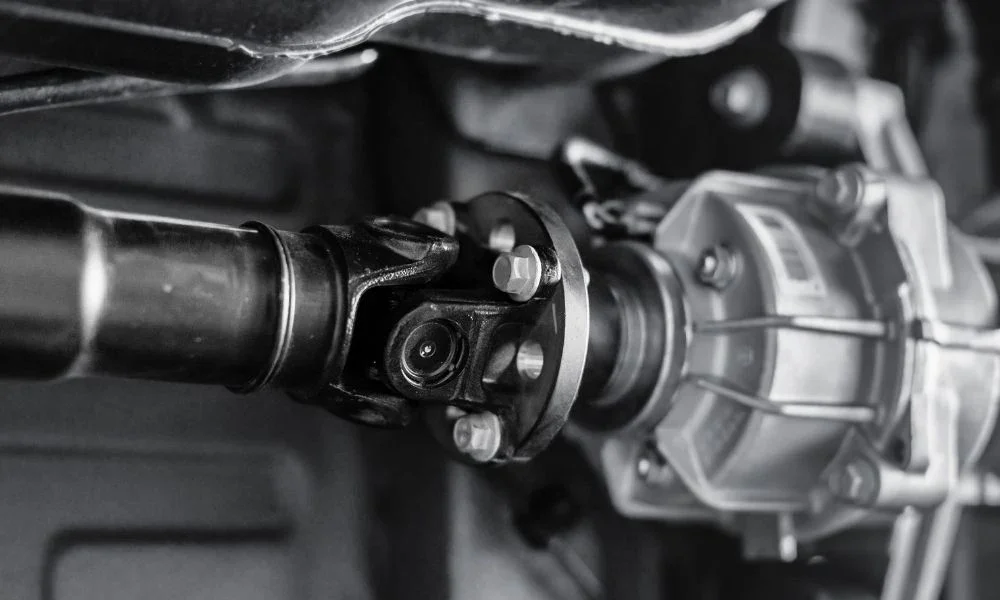
Driveshaft/Propshaft: The long shaft that transmits power from the transmission to the rear axle (or front axle in front-wheel-drive). It spins at high RPM and must be perfectly balanced.
Universal Joints (U-Joints): The flexible joints at each end of the driveshaft that allow it to flex with suspension movement. When they wear, you get vibration or clunking.
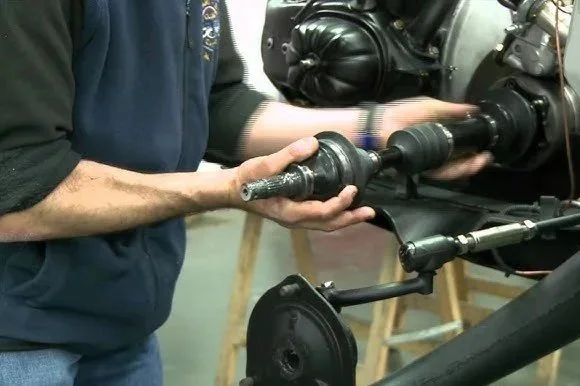
CV Joints & CV Boots: Found on front-wheel-drive cars and some AWD vehicles, CV joints transfer power while allowing steering angle. Torn boots allow grease to escape, leading to joint failure.
Center Support Bearings: Some vehicles (especially longer driveshafts on trucks) have a center bearing that supports the shaft mid-span. A failed bearing creates vibration.
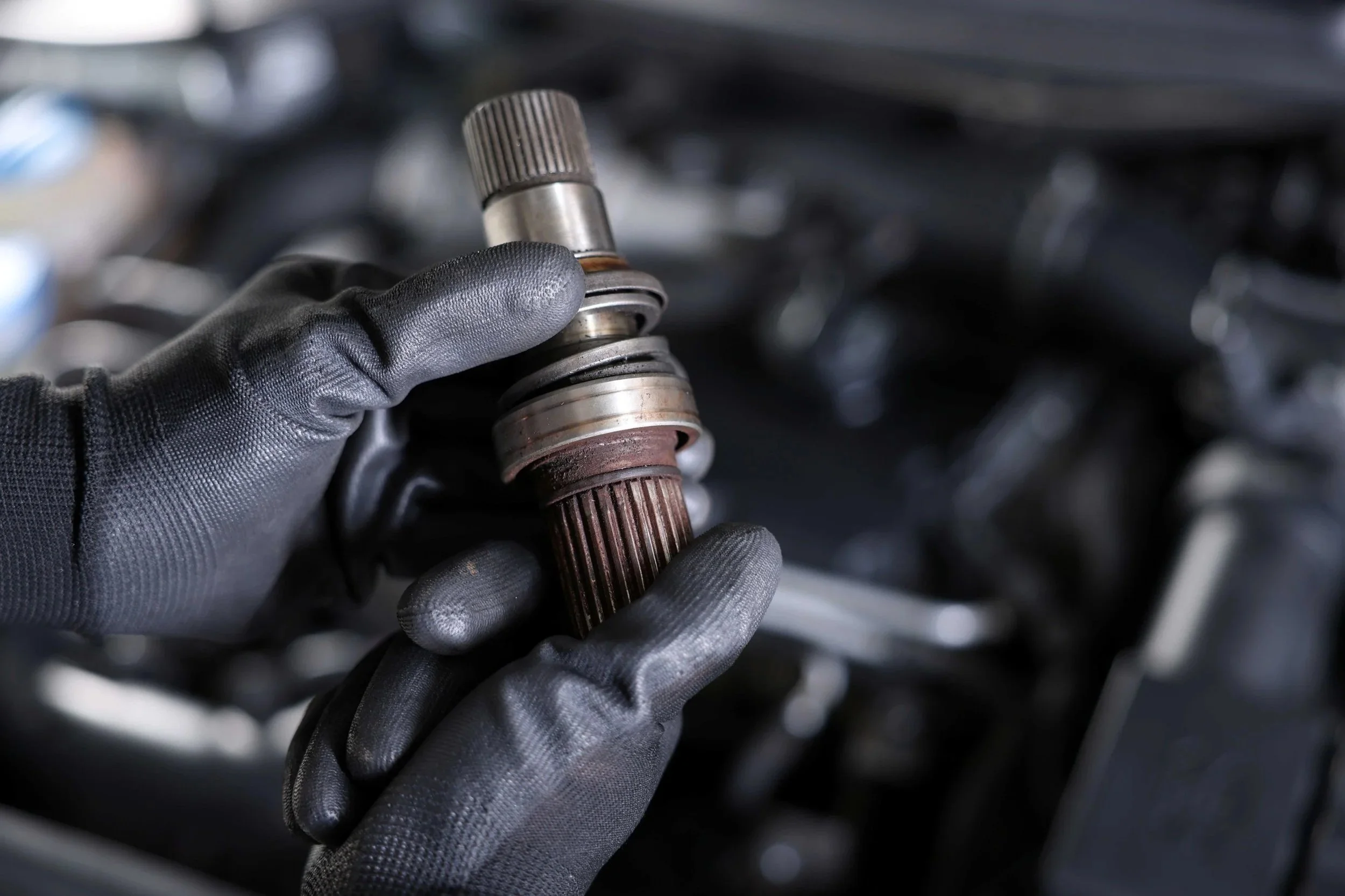
Slip Yokes: The connection point between transmission output and the driveshaft. A worn slip yoke allows too much play.
Symptoms of Driveshaft Problems
Vibration at Highway Speed: A constant shake, usually around 80–100 km/h, that gets worse as you accelerate. Usually indicates an imbalanced or bent shaft, or worn u-joint.
Clunking When Shifting to Drive/Reverse: A sudden bang or clunk when engaging gears. This is often slack in a u-joint or slip yoke.
Squeaking or Clicking in Turns (FWD/AWD): A clicking sound when turning, especially sharp turns. Indicates a worn CV joint.
Visible Rust or Damage: U-joint caps with visible rust, a driveshaft with dents, or a torn CV boot. These are structural failures waiting to happen.

Our Driveshaft Repair Process
1. Road Test & Inspection: We drive with you, feel the vibration, and confirm its speed-dependence and load-dependence.
2. Lift & Visual Inspection: We remove the driveshaft and inspect every component—u-joints, boots, rust, bends.
3. Diagnosis: We identify the exact worn component. U-joints are often replaceable; shafts may need balancing or replacement.
4. Repair or Replacement: Replace u-joints, CV joints, bearings, or the entire shaft if necessary.
5. Balancing: A new or repaired shaft must be balanced to prevent vibration. We balance and reinstall.
6. Road Test: We verify the vibration is gone and confirm proper operation in all gears.
Edmonton Road Conditions & Driveshaft Wear
Potholes: Spring arrives and roads break up. Every pothole jars the suspension and driveshaft. Repeated impacts accelerate u-joint wear.
Frost Heaves: Buckled pavement from freeze-thaw cycles puts sudden loads on the driveshaft. These aren't gentle.
Road Salt & Moisture: Salt accelerates rust on u-joint caps, bearing seals, and CV boots. Rust weakens the metal and allows water inside. Many Edmonton drivers get driveshaft problems at 8–10 years of ownership. In gentler climates, it might take 12+.
Why Trust DOT Transmissions
45+ years of drivetrain expertise: We've replaced thousands of u-joints and driveshafts on Edmonton roads.
We catch problems during transmission work: Often, we identify driveshaft issues while the vehicle is up for transmission service. We tell you early.
Precision balancing: A badly balanced driveshaft will vibrate no matter what. We balance correctly.
3–6 month warranty on repairs: We stand behind our work.
Dot Transmissions is the solution for your clutch replacement needs in Edmonton.
Get reliable clutch replacement and repair services in Edmonton from our skilled technicians. When your clutch is showing signs of wear, it’s important not to delay a service – otherwise, you could find yourself stranded on the road. Book an appointment with Dot Transmissions today, and we’ll get you back on the road in no time.
Frequently Asked Questions:
-
When you press the clutch pedal down, it should feel smooth and consistently springy throughout its movement. When a new clutch is installed, the pedal will usually feel loose or soft, mostly because of the lubrication that was added after the new installation.
-
Yes, a worn-out clutch will cause a loss of acceleration. The springs wear out, and so the clutch discs don’t clamp down as hard on the flywheel.
-
If the clutch already shows signs of slipping, it’s a matter of time before the clutch will stop functioning, but Dot Transmissions does not advise that a vehicle’s owner should attempt to stretch the life of an already slipping clutch. Replacing the clutch should be done as soon as possible.
-
The average time to replace a clutch is between 2 to 6 hours, but in some cases, it can take as long as 10 hours. As with any other repair service, the length of time varies due to several factors. If you make an appointment with us for the clutch replacement job early in the morning, we do our best to return your vehicle on the same day.
-
Replacing a clutch is a big job and is labour-intensive. However, a complete clutch replacement is not always necessary. Most clutches are operated by hydraulics, so sometimes only a hydraulic cylinder or hose needs to be replaced.